




Sanitization/Secure Disposal Policy
Purpose and Benefits
Information systems capture, process, and store information using a wide variety of media, including paper. This information is not only located on the intended storage media but also on devices used to create, process, or transmit this information. These media may require special disposition in order to mitigate the risk of unauthorized disclosure of information and to ensure its confidentiality.
Authority
This standard is approved and authorized by Howard Community College Senior Leadership Team (SLT) for application to the entire network infrastructure used to conduct normal business operations for college faculty, staff, students, and other stakeholders utilizing college owned computing devices or devices otherwise connected to the college network.
Scope
This standard relates specifically to the sanitization and secure disposal of all college data transmitted on systems in Howard Community College network infrastructure.
Information Statement
As per the Information Security Policy, information must be properly managed from its creation, through authorized use, to proper disposal.
The college must ensure that users and custodians of information are aware of its sensitivity and the basic requirements for media sanitization and secure disposal.
The college must ensure that all workforce members, including property management and custodial staff, are made aware of the media sanitization and secure disposal process in order to establish proper accountability for all data.
The college must ensure that confidential material is destroyed only by authorized and trained personnel, whether in-house or contracted, using methods outlined in this standard.
The college may use service providers for destruction purposes provided that the information remains secure until the destruction is completed. The service providers must follow this standard. The college must ensure that maintenance or contractual agreements are in place and are sufficient in protecting the confidentiality of the system media and information commensurate with the information classification standards.
Methods of Media Sanitization
The following table depicts the three types of sanitization methods and the impact of each method.
|
Sanitization Method |
Appropriate Use |
Description |
|---|---|---|
|
Clear |
If the media will be reused and will not be leaving the entity’s control. |
Protects confidentiality of information against an attack by replacing written data with random data. Clearing must not allow information to be retrieved by data, disk or file recovery utilities. |
|
Purge |
If the media will be reused and leaving the entity’s control. |
Protects confidentiality of information against an attack through either degaussing or Secure Erase. |
|
Physical Destruction |
If the media will not be reused at all. |
Intent is to completely destroy the media. |
Sanitization Decision Process
The decision process is based on the confidentiality of the information, not the type of media. The college must choose the type of sanitization to be used, and the type of sanitization is approved by the Information Owner. The technique used may vary by media type and by the technology available to the custodian, so long as the requirements of the sanitization type are met. Recommended Sanitization techniques for specific types of media are outlined in Appendix A of NIST 800-88, Rev. 1, Guidelines for Media Sanitization, Minimum Sanitization Recommendations.
Disposal without sanitization should be considered only if information disclosure would have no impact on organizational mission, would not result in damage to organizational assets, and would not result in financial loss or harm to any individuals.
The security categorization of the information, along with internal environmental factors, should drive the decisions on how to deal with the media. The key is to first think in terms of information confidentiality, then apply considerations based on media type.
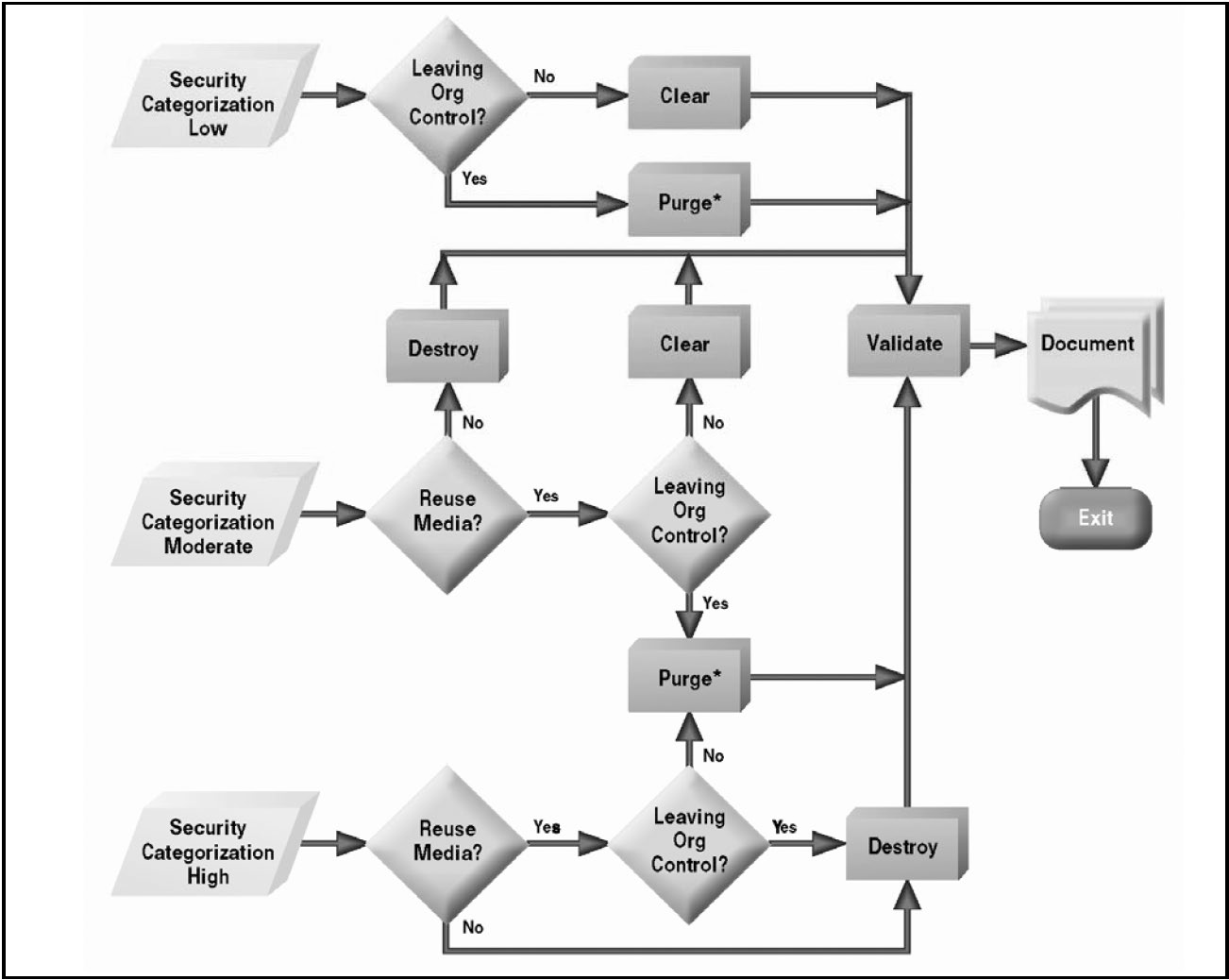
Figure 4.1 – Sanitization and Disposition Decision Flow
(from NIST 800-88, Rev. 1, Guidelines for Media Sanitization)
The cost versus benefit of a sanitization process should be understood prior to a final decision. The college can always increase the level of sanitization applied if that is reasonable and indicated by an assessment of the existing risk. For example, even though Clear or Purge may be the recommended solution, it may be more cost-effective (considering training, tracking, and validation, etc.) to destroy media rather than use one of the other options. The college may not decrease the level of sanitization required.
Control of Media
A factor influencing a sanitization decision is who has control and access to the media. This aspect must be considered when media leaves organizational control. Media control may be transferred when media are returned from a leasing agreement or are being donated or resold to be reused outside the organization. The following are examples of media control:
Under College Control:
- Media being turned over for maintenance are still considered under the entity’s control if contractual agreements are in place and the maintenance providers specifically provides for the confidentiality of the information.
- Maintenance being performed on an entity’s site, under the entity’s supervision, by a maintenance provider is also considered under the control of the entity.
Not Under College Control:
- Media that are being exchanged for warranty, cost rebate, or other purposes and where the specific media will not be returned to Howard Community College are out of the college’s control.
Reuse of Media
The college should consider the cost versus benefit of reuse. It may be more cost-effective (considering training, tracking, and validation, etc. to destroy media rather than use one of the other options.
Clear / Purge / Destroy
|
Method |
Description |
|---|---|
|
Clear |
One method to sanitize media is to use software or hardware products to overwrite user- addressable storage space on the media with non-sensitive data, using the standard read and write commands for the device. This process may include overwriting not only the logical storage location of a file(s) (e.g., file allocation table) but also should include all user- addressable locations. The security goal of the overwriting process is to replace Target Data with non-sensitive data. Overwriting cannot be used for media that are damaged or not rewriteable and may not address all areas of the device where sensitive data may be retained. The media type and size may also influence whether overwriting is a suitable sanitization method. For example, flash memory-based storage devices may contain spare cells and perform wear levelling, making it infeasible for a user to sanitize all previous data using this approach because the device may not support directly addressing all areas where sensitive data has been stored using the native read and write interface. The Clear operation may vary contextually for media other than dedicated storage devices, where the device (such as a basic cell phone or a piece of office equipment) only provides the ability to return the device to factory state (typically by simply deleting the file pointers) and does not directly support the ability to rewrite or apply media specific techniques to the non-volatile storage contents. Where rewriting is not supported, manufacturer resets and procedures that do not include rewriting might be the only option to Clear the device and associated media. These still meet the definition for Clear as long as the device interface available to the user does not facilitate retrieval of the Cleared data. |
|
Purge |
Some methods of purging (which vary by media and must be applied with considerations described further throughout this document) include overwrite, block erase, and Cryptographic Erase, through the use of dedicated, standardized device sanitize commands that apply media-specific techniques to bypass the abstraction inherent in typical read and write commands. Destructive techniques also render the device Purged when effectively applied to the appropriate media type, including incineration, shredding, disintegrating, degaussing, and pulverizing. The common benefit across all these approaches is assurance that the data is infeasible to recover using state of the art laboratory techniques. However, Bending, Cutting, and the use of some emergency procedures (such as using a firearm to shoot a hole through a storage device) may only damage the media as portions of the media may remain undamaged and therefore accessible using advanced laboratory techniques. Degaussing renders a Legacy Magnetic Device Purged when the strength of the degausser is carefully matched to the media coercivity. Coercivity may be difficult to determine based only on information provided on the label. Therefore, refer to the device manufacturer for coercivity details. Degaussing should never be solely relied upon for flash memory-based storage devices or for magnetic storage devices that also contain non-volatile non-magnetic storage. Degaussing renders many types of devices unusable (and in those cases, Degaussing is also a Destruction technique) |
|
Destroy |
There are many different types, techniques, and procedures for media Destruction. While some techniques may render the Target Data infeasible to retrieve through the device interface and unable to be used for subsequent storage of data, the device is not considered Destroyed unless Target Data retrieval is infeasible using state of the art laboratory techniques.
The application of Destructive techniques may be the only option when the media fails and other Clear or Purge techniques cannot be effectively applied to the media, or when the verification of Clear or Purge methods fails (for known or unknown reasons). |
Validation
The college must test a representative sampling of media for proper sanitization to assure that proper protection is maintained.
Verification of Equipment
If the college is using sanitization tools (e.g., a degausser), the college must have procedures to ensure that the tools are operating effectively.
Verification of Personnel Competencies
The college must ensure that equipment operators are properly trained and competent to perform sanitization functions.
Document
The college must maintain a record of their sanitization to document what media were sanitized, when, how they were sanitized, and the final disposition of the media.
Compliance
This standard shall take effect upon publication. Compliance is expected with all enterprise policies and standards. Policies and standards may be amended at any time.
If compliance with this standard is not feasible or technically possible, or if deviation from this policy is necessary to support a business function, the information owner shall request an exception through the Chief Information Security Officer or designated information security executive's exception process.
Contact Information
Submit all inquiries and requests for future enhancements to the policy owner at Howard Community College.
Revision History
This standard shall be subject to periodic review to ensure relevancy.
Effective Date: July 16, 2026
President's Office Use: Senior Leadership Team
References
Center for Internet Security (CIS)
Cybersecurity and Infrastructure Security Agency (CISA)
National Institute of Standards and Technology (NIST) 800-88, Rev. 1, Guidelines for Media Sanitization